Residential Sanitation Service: What It Means and What to Expect
Residential Sanitation Service: What It Means and What to Expect
"Sanitation service" is a term that shows up more often in municipal government language than everyday conversation, but it describes exactly what most homeowners are looking for when they search for trash or garbage pickup: a reliable system for removing household waste before it becomes a health or hygiene issue. This guide covers what residential sanitation service actually involves, how it differs by region, and what standard should apply regardless of which term a provider uses.
Trash Reapers provides weekly residential sanitation service throughout Cobb County, Paulding County, and surrounding Georgia communities including Acworth, Dallas, Hiram, Kennesaw, and Powder Springs, with simple $25/month pricing and no hidden fees.
Table of Contents
What "Sanitation Service" Means
Residential sanitation service refers to the systematic removal of household waste to maintain hygienic, healthy living conditions — the same underlying service most people call trash pickup or garbage collection, described through more formal, health-oriented terminology. The term "sanitation" emphasizes the public health function of the service: preventing waste accumulation that can attract pests, create odor issues, or contribute to unsanitary conditions in a neighborhood.
This terminology is especially common in municipal contexts — many cities and counties have a "Department of Sanitation" or "Sanitation Division" that historically handled waste collection directly, which is part of why the phrase persists even in areas, like much of Cobb and Paulding County, where residential waste collection is now primarily handled by private companies rather than local government.
Sanitation Service vs. Trash Pickup: Same Thing, Different Language
For a homeowner, there's no practical difference between "residential sanitation service" and "residential trash pickup" — both describe the same weekly curbside collection of household waste. The terminology difference tends to reflect regional habits, generational language patterns, or simply which phrase a particular municipality or company has historically used.
Understanding this helps when searching for a provider: a company might use "sanitation" language on some pages and "trash" or "garbage" language elsewhere, but as long as the underlying service (weekly curbside collection of a standard-sized can) matches what you need, the terminology itself shouldn't be a deciding factor.
Why Sanitation Service Matters for Public Health
Reliable residential sanitation service serves a genuine public health function beyond simple convenience. Consistent removal of household waste helps prevent:
Pest attraction. Accumulated food waste and trash attract rodents, insects, and other pests, particularly in warmer climates like Georgia, where waste can become a problem within days rather than weeks.
Odor and neighborhood impact. Overflowing or infrequently collected trash creates odor issues that affect not just the individual household but often neighboring properties as well.
Disease prevention. Historically, organized sanitation service has been one of the most significant public health interventions in urban and suburban areas, reducing the spread of disease associated with unmanaged waste.
This is part of why weekly (rather than less frequent) collection is the standard for most residential neighborhoods — the health and hygiene benefits of consistent removal outweigh the modest cost savings of a less frequent schedule.
Municipal Sanitation Departments vs. Private Providers
In some cities and counties, sanitation service is handled directly by local government, funded through property taxes or a mandatory fee, with a municipal sanitation department managing the actual collection. In much of Cobb and Paulding County, Georgia, however, residential sanitation service works differently: homeowners typically select and pay a private provider directly, rather than relying on a single county-run department.
This distinction matters practically because it means most homeowners in these areas have genuine choice in provider, and switching companies is usually a straightforward option rather than something governed by municipal contract. If you're unsure which model applies to your specific address, a quick call to a local provider or a check with your county's public works or sanitation department page will clarify it.
What Standard Residential Sanitation Service Includes
Standard weekly residential sanitation service through Trash Reapers includes:
Weekly curbside pickup, same day every week
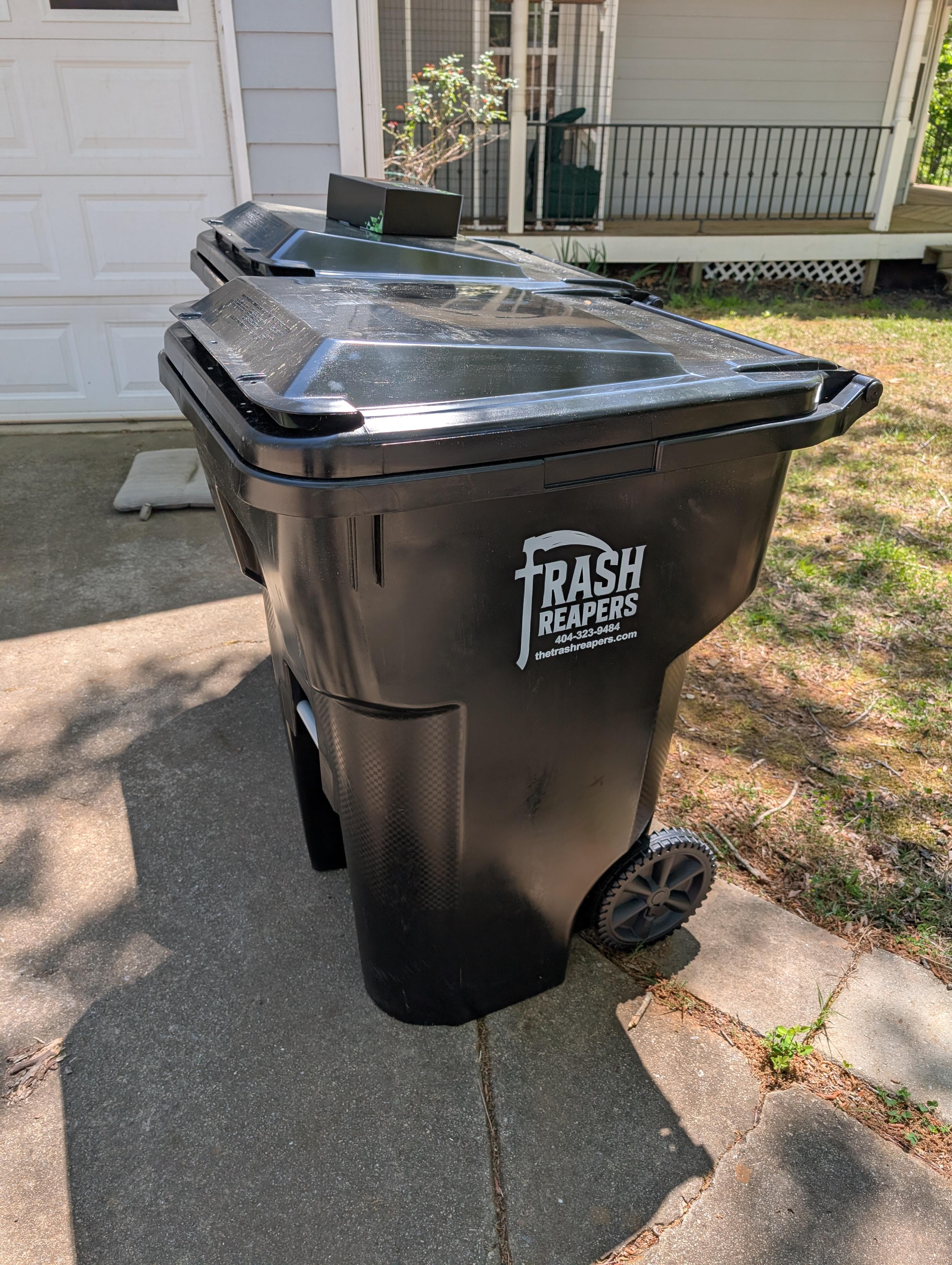
One 95-gallon trash can
Flat monthly pricing at $25/month
No fuel surcharges
No random environmental fees
Local, human customer support by phone or text
Clear, proactive communication about schedule changes
A one-time service activation fee may apply unless waived at signup. Yard waste may be included depending on the specific service area, so it's worth confirming this directly, since local rules vary by neighborhood.
Bulk item pickup isn't included in standard service, but referrals to junk removal or dumpster rental options are available for larger cleanouts.
Sanitation and Pest Prevention
One of the most practical, tangible benefits of consistent residential sanitation service is pest prevention. A trash can that's reliably emptied on the same day every week gives pests far less opportunity to establish themselves around a property compared to a can that sits full for extended or unpredictable periods.
Homeowners can support this further by keeping cans closed properly, avoiding overloading (which prevents the lid from sealing), and reporting a missed pickup promptly rather than letting an overflow situation continue for an extended period. A reliable provider that responds quickly to missed pickup reports plays a direct role in maintaining this kind of pest prevention for a household.
What Sanitation Service Should Cost
For weekly collection of one 95-gallon can, $25/month represents a fair, all-in rate. When evaluating sanitation service pricing, the same considerations apply as with any residential waste service:
Watch for fees layered on top of the base rate, such as fuel surcharges or vague administrative charges.
Confirm whether introductory pricing increases after a set period.
Understand contract terms, including whether automatic renewal applies and what cancellation requires.
Trash Reapers keeps sanitation service pricing simple: $25/month, no fuel surcharges, no hidden fees.
Evaluating a Residential Sanitation Provider
A few practical checks help identify a reliable sanitation service provider:
Confirmed service area. The company should explicitly serve your specific city or county.
Transparent pricing. A clear monthly rate available without extensive back-and-forth.
Direct communication options. The ability to reach a real person by call or text rather than only an automated system.
Recent, specific reviews. Reviews mentioning actual pickup experiences from recent months are more useful than an aggregate star rating.
Clarity on inclusions. Confirm directly whether recycling, yard waste, and bulk items are part of standard service.
What Can and Can't Go Into Standard Sanitation Service
Standard weekly sanitation service is designed for everyday household waste — kitchen trash, packaging, and general non-recyclable waste that fits inside a 95-gallon can with the lid closed.
Items generally excluded include large furniture and appliances, construction or renovation debris, tires, hazardous materials like paint or chemicals, and excess yard waste beyond what a specific service area allows. These typically require a separate bulk pickup, junk removal service, or dumpster rental arrangement.
Does Sanitation Service Include Recycling?
Not always — recycling and sanitation service are frequently treated as separate offerings, even though they're sometimes bundled by certain providers. Trash Reapers does not currently include recycling as part of standard service.
Homeowners interested in recycling should ask directly what's available in their specific neighborhood, since options and rules vary significantly by municipality and subdivision throughout Cobb and Paulding County.
Common Sanitation Service Complaints
Across residential neighborhoods, similar complaints recur with larger sanitation providers:
Missed collections with no explanation. A can sits out with no clear way to find out why it wasn't emptied.
Bills that increase unexpectedly. Fees added without clear disclosure at signup.
Difficulty reaching customer service. Long hold times with representatives who lack specific route knowledge.
Inconsistent collection days. Schedule changes without adequate notice.
These issues tend to scale with provider size, since larger operations generally have less direct visibility into individual routes and customer accounts than smaller, local companies.
Switching Sanitation Providers
Switching sanitation service providers is usually more straightforward than homeowners expect, particularly in areas where service isn't tied to a fixed municipal contract. The typical process:
Check whether your current provider requires notice before cancellation
Sign up with the new provider and confirm your pickup day
Coordinate any can swap, if applicable
Cancel your previous service once the new provider is confirmed and active
For homeowners in the areas Trash Reapers serves, this starts with a simple call or text to 404-323-9484.
Areas We Serve
Trash Reapers provides weekly residential sanitation service throughout:
Acworth, GA
Dallas, GA
Hiram, GA
Kennesaw, GA
Powder Springs, GA
Surrounding Cobb County and Paulding County communities
If your neighborhood isn't listed here, reach out directly to confirm availability, as service areas continue to grow.
Frequently Asked Questions
Is residential sanitation service the same as trash pickup? Yes — "sanitation service" and "trash pickup" describe the same underlying service, with the terminology often reflecting regional or municipal language habits.
Who provides residential sanitation service in Cobb and Paulding County? Most neighborhoods are served by private companies that homeowners select directly, rather than a single county-run sanitation department. Trash Reapers is one such local option.
How much does residential sanitation service cost? Trash Reapers charges $25/month for weekly pickup of one 95-gallon can, with no fuel surcharges or hidden fees. A one-time activation fee may apply unless waived.
Does sanitation service include recycling? Not with Trash Reapers currently. Homeowners interested in recycling should confirm what's separately available in their area.
What happens if my sanitation pickup is missed? Contact Trash Reapers directly by call or text at 404-323-9484 for a quick resolution.
What areas does Trash Reapers serve? Acworth, Dallas, Hiram, Kennesaw, Powder Springs, and surrounding Cobb County and Paulding County communities in Georgia.
How do I switch to Trash Reapers? Call or text 404-323-9484 to confirm service availability in your area and set a pickup day.
Looking for residential sanitation service that's actually reliable? Trash Reapers provides simple, weekly pickup throughout Cobb County, Paulding County, and surrounding Georgia communities — no corporate runaround, no hidden fees. Call or text 404-323-9484 to get started, or visit thetrashreapers.com.
